Swiss Chard Glatter Zilver – Heirloom Seed
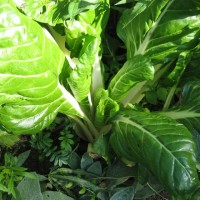
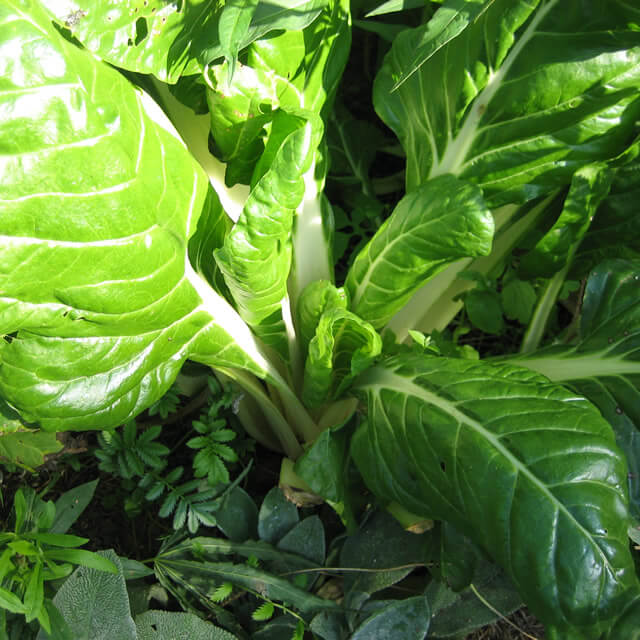
A classic Swiss chard with broad, silvery-white stems and deep dark green leaves. When grown in a sheltered location, this robust plant can be harvested year-round. Swiss Chard Glatter Zilver grows tall and rarely bolts. This old variety has an attractive appearance and produces a high yield. A true asset for your vegetable garden.
Sowing Swiss Chard
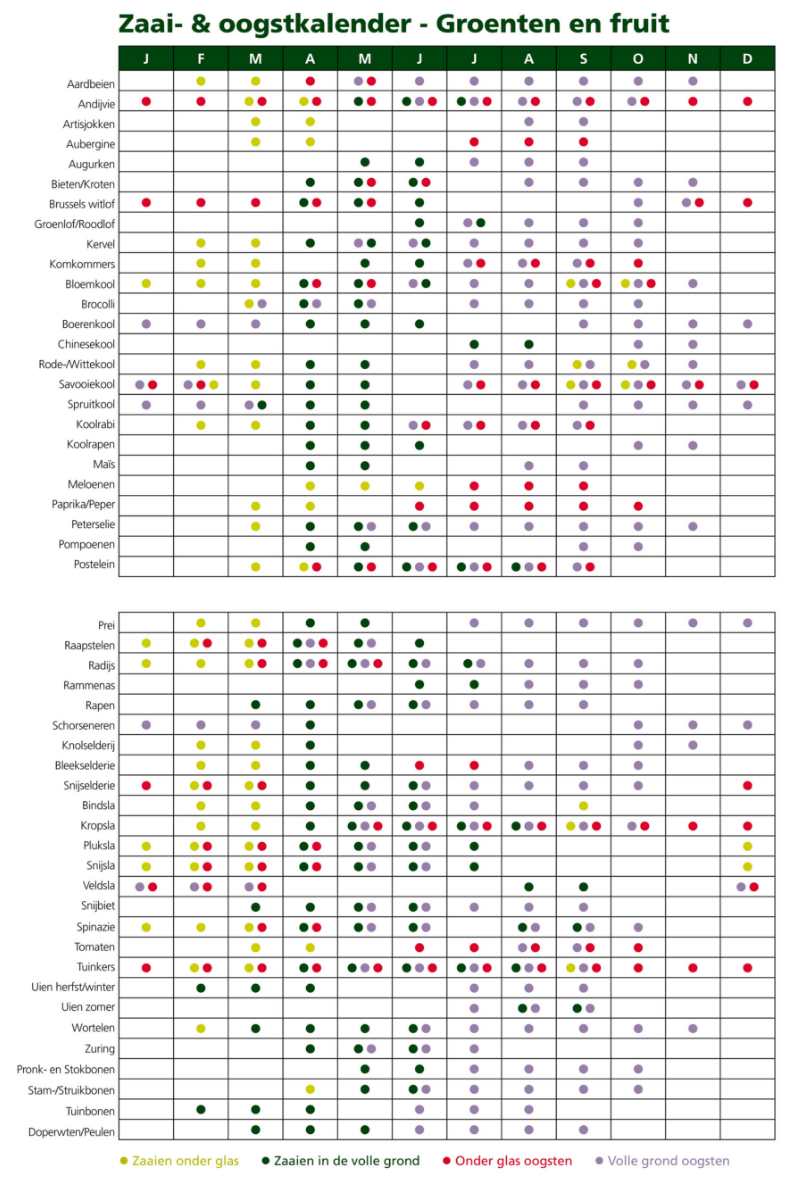
From mid-March, sowing is only suitable for indoor cultivation, on a windowsill or in a greenhouse.
From April through June, seeds can be sown directly in open ground.
Sow at a depth of approximately 3 cm and maintain a plant spacing of 25 to 30 cm.
Swiss chard is a leafy vegetable that prefers moist soil. Apply fertilizer regularly, optionally mixed into the watering water.
Good Neighbors and Distant Friends
Swiss chard grows well alongside legumes, broccoli, and radishes.
Keep Swiss chard away from beets, carrots, brassicas, spinach, and strawberries.
Tip
Use nettle slurry to maintain good health of Swiss chard and other plants. The nutrients in this slurry increase your plants’ resistance to diseases, fungal infections, and insect pests, while also boosting soil life.
What You Need to Make Nettle Slurry
(for 10 liters of nettle slurry)
- 1 kilogram of nettles (without seeds)
- 10 liters of water
- A plastic bucket or barrel with a capacity of at least 10 liters
- Mesh or a lid
Cut the (young) nettles into coarse pieces. Pour the water over them and cover the bucket with mesh or loosely place the lid on top. Do not place the bucket in direct sunlight, but choose a location where any odor will not cause nuisance.
Stir the mixture briefly once a day. In warm weather, the slurry ferments faster than in cooler temperatures. After a few days, it will begin to foam. Once the liquid becomes clear and barely foams, the slurry is ready. The smell is similar to cow manure.
Strain the slurry and mix 1 liter of it with 10 liters of water. Spray or pour this mixture over your plants in the evening. The remaining plant material can be spread in the garden or added to the compost heap.
Not suitable for use on legumes and onions.
Store the nettle slurry in bottles or other sealed containers and keep them in a cool place.
- Stock: In Stock
- Brand: Gaia Seeds
- Category: Swiss chard
- SKU: GS-BGSB01
Available Options
Swiss Chard Glatter Zilver – Heirloom Seed
A classic Swiss chard with broad, silvery-white stems and deep dark green leaves. When grown in a sheltered location, this robust plant can be harvested year-round. Swiss Chard Glatter Zilver grows tall and rarely bolts. This old variety has an attractive appearance and produces a high yield. A true asset for your vegetable garden.
Sowing Swiss Chard
From mid-March, sowing is only suitable for indoor cultivation, on a windowsill or in a greenhouse.
From April through June, seeds can be sown directly in open ground.
Sow at a depth of approximately 3 cm and maintain a plant spacing of 25 to 30 cm.
Swiss chard is a leafy vegetable that prefers moist soil. Apply fertilizer regularly, optionally mixed into the watering water.
Good Neighbors and Distant Friends
Swiss chard grows well alongside legumes, broccoli, and radishes.
Keep Swiss chard away from beets, carrots, brassicas, spinach, and strawberries.
Tip
Use nettle slurry to maintain good health of Swiss chard and other plants. The nutrients in this slurry increase your plants’ resistance to diseases, fungal infections, and insect pests, while also boosting soil life.
What You Need to Make Nettle Slurry
(for 10 liters of nettle slurry)
- 1 kilogram of nettles (without seeds)
- 10 liters of water
- A plastic bucket or barrel with a capacity of at least 10 liters
- Mesh or a lid
Cut the (young) nettles into coarse pieces. Pour the water over them and cover the bucket with mesh or loosely place the lid on top. Do not place the bucket in direct sunlight, but choose a location where any odor will not cause nuisance.
Stir the mixture briefly once a day. In warm weather, the slurry ferments faster than in cooler temperatures. After a few days, it will begin to foam. Once the liquid becomes clear and barely foams, the slurry is ready. The smell is similar to cow manure.
Strain the slurry and mix 1 liter of it with 10 liters of water. Spray or pour this mixture over your plants in the evening. The remaining plant material can be spread in the garden or added to the compost heap.
Not suitable for use on legumes and onions.
Store the nettle slurry in bottles or other sealed containers and keep them in a cool place.